
Capitalism is Artificial Intelligence
Inverse Cramer, Kantian Containment, Deep Learning Neural Networks, and Man's Barter with the Future

Between medieval scholasticism and Kant, Western reason moves from a parochial economy to a system in which, abandoning the project of repressing the traffic with alterity, one resolves instead to control the system of trade.
- Nick Land, ‘Kant, Capital, and the Prohibition of Incest’
What would you do if you could predict the future?
Would you buy a lottery ticket? Short a stock that will imminently collapse? Use your ability to plan trips? Don’t take that flight—definitely not that one. Would you use it as a party trick? A way to flirt? Predicting the future has tickled the human mind since ancient Mesopotamia, when priests tried to divine the future by examining animal livers. Seems savage and barbaric, yet today the priests of the digital pantheon use the dismembered guts of our digital ghosts to make predictions about the future.
Machine learning is a fascinating subject that spans many techniques. Machine learning models are modern extispicy, and they do everything from winning chess games and populating social media feeds to creating images of nonexistent people and talking like a human. At the core of machine learning is prediction. Machine learning is a large subset of the broader field of Artificial Intelligence; so large that the two are nearly synonymous.
But there is nothing new under the sun. Long before the first neural networks and Monte Carlo Markov chains were sketched, human society actively embodied artificial intelligence in our exchanges with one another.

Intelligence Predicts
Intelligence predicts. Intelligence infers from data. Human intelligence seeks to predict the future. Problem-solving is a process of forecasting outcomes from actions. We plan for contingencies. We bring an umbrella. We hedge on the stock market. We do it a lot, but we are not great at it. The human mind is not a data-processing machine. It is a story-building machine. So, we created machine learning models to help us predict. But machines are not necessary to improve human predictive capabilities. Some of the things we make machines do to improve prediction can be emulated in other ways.
One way we improve machine learning models is by using rewards and punishments to train them to make better predictions. Another improvement is aggregation, both of data and in architecture. Machine learning models require big data. They work across many dimensions and predict through multiple layers of neural networks.
Both of these aspects are present within market economies. Capitalism is an artificially intelligent system. Human minds are the parameters, and the narratives they contain are the model's weights. Individual narratives shift and transform throughout life as people take in new information. As soon as they trade on that information, they are contributing to the model. Millions of people do this every day, whether it is in the stock, crypto, or prediction markets.
In the Austrian/Schumpeterian view, the chief drive of the market is the entrepreneur. The entrepreneur is an individual who tries to predict the future. He tries to predict what people will want in the future, and he risks his capital to start a venture. The right entrepreneurs will make a profit, while the wrong ones will lose their money. In machine learning, this is called reinforcement learning. The model makes predictions in a complex environment to maximize its reward signal. But entrepreneurs are not analogous to models, nor are they the sole predictors in the economy.
What kind of reinforcement learning could be better than losing money? There is an adaptive process in markets to prune weights that are not predictive.
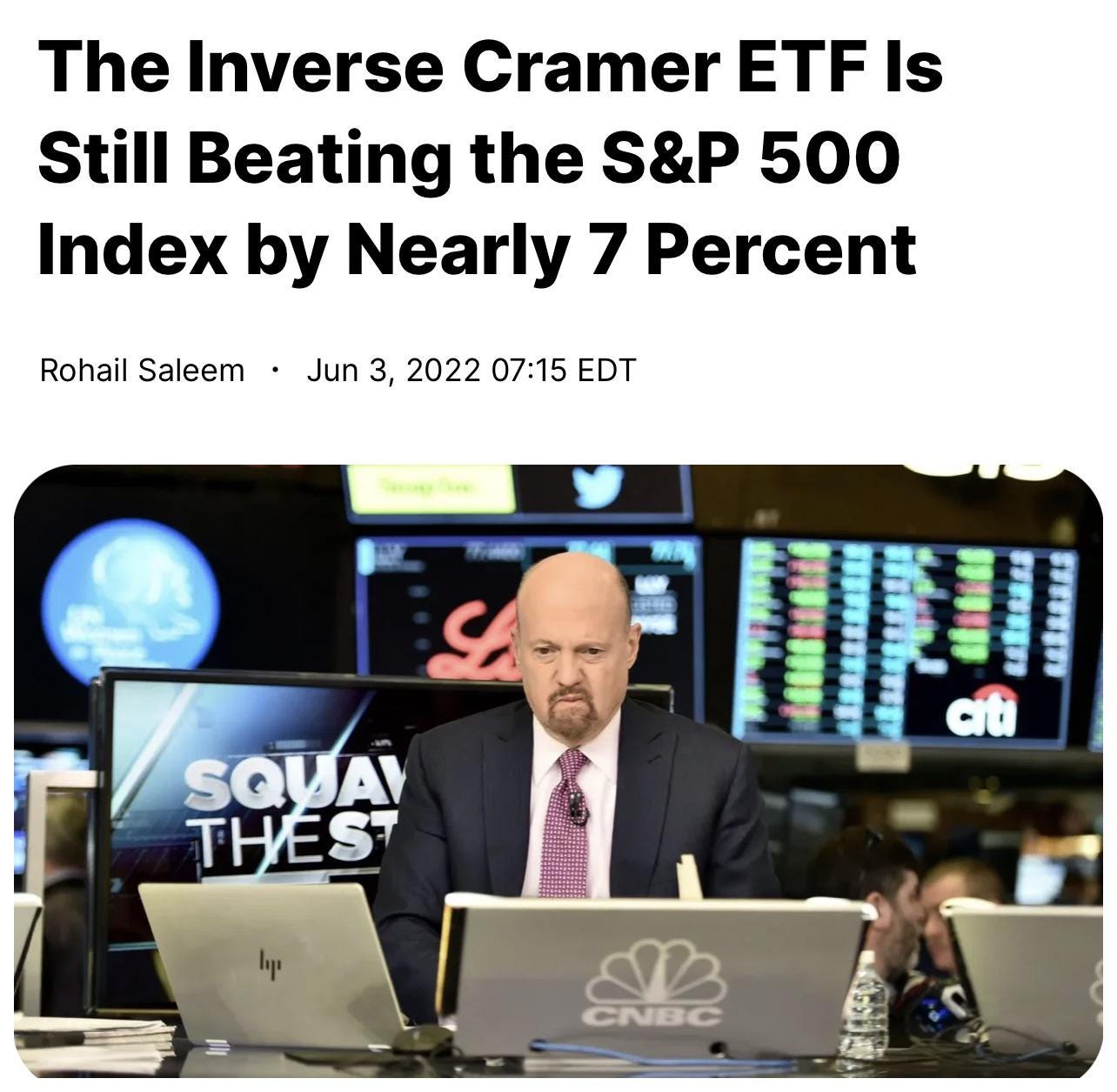
Instead, anyone trying to maximize profit is a predicting node in the AI we call capitalism. In neural networks, there is a process called pruning. Weights, nodes, and layers that contribute little towards prediction are discarded. In the actual market, it is more often the moderate losers who are pruned. The moderate and large winners are allowed to stay because they keep their money. The serious winners exist rarely. The negatively predictive neurons in a neural network are allowed to stay because they are predicting, just in reverse. When a neuron is negatively predictive, the model assigns a negative weight to it in the next layer.
This, too, has an analog in capitalism:
Predictive nodes in the markets take many forms. There are the entrepreneurs, as mentioned before. There are also investors. The stock and derivatives markets are efficient because market makers are constantly seeking and exploiting arbitrage opportunities. This forces prices to go into lock step across the market. This is why you cannot buy shares on Schwab and then turn around and sell them on Robinhood at a different price in the same exact moment. This process is why I was taught in my economics major that there is no arbitrage.
The next moment is a different story.
Asset prices change. If someone perceives that a company is undervalued relative to its market price, they will sell their shares. They will do this based on a narrative informed by some information that they have acquired. They sell the shares and inject this information into the market. In contrast, someone who has information indicating the company will be more valuable than its current stock price suggests will gladly purchase it. This opens up the door for future arbitrage, which is always uncertain. As soon as it becomes certain, the information spreads and everyone trades on it. It gets priced in.
The stock market then functions as a massive data-collection machine that turns that data into predictions by incorporating all information communicated through buy and sell orders. This works at more minor scales as well. In Adaptive Markets, Andrew Lo describes a class experiment in which he had his students simulate a market that consisted only of trading bycicle pumps. He was surprised when he saw that the market simulation matched the pumps' evaluations exactly with consumer preference studies. Over the next decade, he repeated this experiment with many other product categories and saw the same results. He states:
Efficient markets are powerful, practical tools to aggregate information, and they do it more quickly and cheaply than any known alternative. In effect, a market acts like a massive supercomputer, one whose individual parts are composed of the smartest computers we know: the human brain.1
The combination of multiple predictive nodes (the people in the market) and reinforcement learning (skin in the game, where you lose money if you are wrong) makes markets accurate predictors of the future. So, what if we used markets to predict the future outside of the business world?
Markets make inferences about the future. Models make inferences about the future.
Prediction markets have become incredibly popular recently. They are currently replacing traditional prediction methods, such as “experts” and polling. The key difference is that many people can incorporate information about simple, clear binary choices. Unlike polls, which can have loaded questions, sampling issues, etc., prediction market events put forward simple binaries that must be crystal clear. They must be crystal clear because money is on the line.
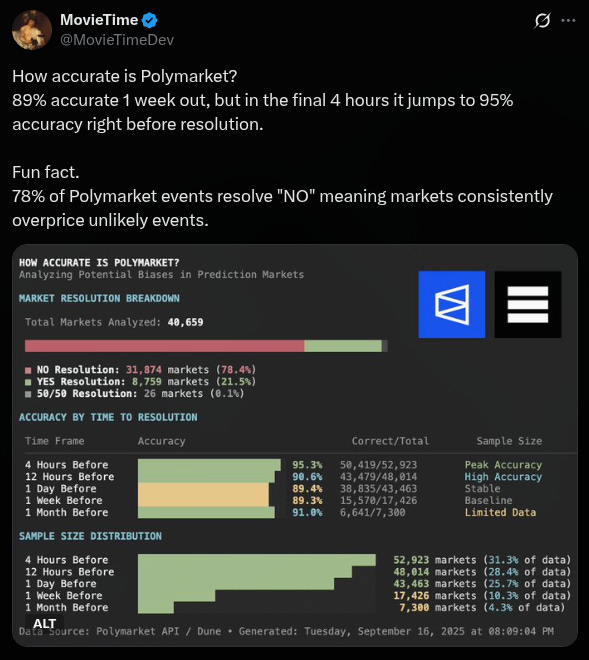
And because money is on the line, people trade their information.
Humans are bad at predicting when there is nothing on the line. If you are asked which blade of grass in a large field will grow tallest, you may as well guess randomly. If someone puts a good wager before you, you may soon become the world’s top grass expert. You may even be better than the world’s top experts. Has anyone heard from Nate Silver lately?
Optimization
Carissimo & Korecki (2024) model capitalism as an artificial intelligence driven by quantitative optimization. They argue that capital is a self-reinforcing, complex entity that processes quantified value (money, assets, prices) and pursues its own expansion.
The authors model Capital as a historical agential system, embedded in the social sphere, embodied in quantified value, and pursuing its maximization. Capital is driven by human, corporate, and ML systems seeking to accumulate more capital through quantitative and qualitative generation techniques.
They argue that qualitative techniques are based on subjective experience and individual values and are therefore non-quantifiable, whereas quantitative processes are amenable to optimizing governance. According to the authors, this means that aspects of Capital can be reduced to computational logic.
However, qualitative and subjective individual values and beliefs are still subsumed by Capital. The authors err by failing to recognize that these subjective experiences are the weights within the human parameters that operate within Capital. The Misesian position takes subjective individual values as the starting point for all economic phenomena, and this is correct. Any subjective value that is important to Capital is, by definition, priced into the market because individuals act on that valuation in their behavior.
Carissimo and Korecki identify two key relationships between Capital and AI. AI systems, from LLMs to recommendation algorithms, process quantified value to create more value through attention capture, transforming it into big data for advertising in the service of revenue. These AI systems are agents within capital.
The second relationship they define is Capital as artificial intelligence. Capital’s evolution is driven by quantitative optimization; it functions like AI. Keep in mind that the qualitative data also drives the evolution of Capital as mentioned above. Individual experience and information gathering are injected into the market in trades, transactions, etc. The collection of these individual actions, all of which are ultimately pursuing some form of subjective optimization, comprises the market as a whole. This creates capitalism as a perceived unitary whole pursuing growth and accumulation, which, in turn, generates new information.
Hence, they argue, Capital itself is an optimization process operating on a global scale. It is a distributed artificial intelligence without consciousness or intent.
Like large language models, Capital produces outputs that appear meaningful but lack intrinsic intent or morality: “Optimization does not possess a normative dimension required for intent.” Prices reflect human preferences, but prices also shape preferences; the drive towards equilibrium in supply and demand. The authors describe this as a recursive feedback loop that makes the “meaning” of economic signals self-referential and hollow. Capital simulates meaning. Prices are a simulation of meaning in the Baudrillardian sense in which the sign comes to replace the referent. Life insurance can put a price on your loved ones.
Capital, like AI, creates meaningless meaning. It becomes meaningful only when the human person incorporates the information into subjective experience.
Melting Down Kantian Containment
For Kant, the noumenon/thing in itself is the reality outside of human experience. Man’s perception conditions reality through man's perceiving it. This object of experience is knowable and empirical. The understanding within space and time unifies its appearance. Man can think about the noumenon, but he cannot ever know it because it is wholly outside of experience, apart from all sensibility and understanding.
Nick Land argues that Kant’s development of the object in philosophy is done as a security measure. The concept of the object captures and labels otherness, thereby constraining it. This stabilizes human experience. The Kantian framework eliminates alterity, being anything that would exceed or contaminate the categories of the subject. Otherness is fixed as an object within knowledge rather than as an alien, chaotic material flux.
In ‘Kant, Capital, and the Prohibition of Incest’,2 Land suggests that the logic of object standardization for cognition is the same logic of capitalist exchange in the standardization of commodities for trade. This is the logic of colonialism: incorporating the otherness of the undeveloped world and using economic development to shield against its alien aspects. Land argues that the Kantian object is the transcendental prototype of capital. It masks the underlying energetic base of desire and production.
What the hell does this mean? This is the point in this essay where I dodge a nightmarish exposition on Deleuze.
Desiring-production, in classical economic terms, is the subjective valuations and entrepreneurial discoveries of many actors within the market. Individuals throughout the economy act on preferences and generate the spontaneous order through their individual quests for personal utility maximization. Textbooks, classes, exercises, etc., all demonstrate the process by which the producer and consumer haggle over the price of a good or service until the mutually beneficial price is established. In practice, however, I have only seen this process actually take place in Moroccan markets. In everyday American life, one does not have the chance to negotiate the price of milk with the cashier. Prices are abstracted and standardized away. The supply-and-demand feedback loop still exists, but it is much larger and utterly detached from the living, breathing, sweating, flesh-and-blood parts of the economy.
Living and creative activity is reified into objects for calculation, and market information becomes a series of snapshots rather than the continuous, vital process of production and exchange. Reality transforms into data. Data is what artificial intelligence eats.
The classical economic order is the Kantian containment structure. Markets are framed around humans and represent human values, like the logic of the object, and categories represent reality. The containment structure breaks down as feedback loops intensify due to the integration of machine intelligence into the entire system. The globalization of trade and tightening feedback loops, along with the fusion of markets with machines, created what Land names techno-capital; innovation increases speed, interconnection, and data, with economic and technological efficiency reinforcing one another.3
A meltdown occurs when the representation layer collapses. The representation layer of capitalism comprises the external structure and the models used to describe it. Hayek already recognized that the market was too complex for any one person to comprehend fully.
Things can work without humans having any idea how exactly they work. Economics sketches general descriptions that can be applied to economic reality, but these are always imperfect abstractions. They give heuristics but do not describe the market itself. The market has no representation; it is its own representation.
This is similar to the black box of deep neural networks, where backpropagation sets every weight during training, yet even the creators don't know what each weight means. They evaluate it based on its output accuracy. The outputs serve as a measure of neural network quality. With enough time and effort, AI researchers can identify what some of the weights mean, as the Anthropic team did when it figured out which Claude weight corresponded to the Golden Gate Bridge. Similarly, research papers can uncover and describe segments of economic reality. But in both cases, grasping the whole system at once is beyond the scope of the human mind.
The feedback loop of tightening information flow and economic globalization causes the meltdown. Rational categorization of any object or asset becomes secondary to the prices. Every identity becomes fungible, and exchange reintroduces alterity in the differential flux of money and prices. Shifting relationships among countless exchanges determine value, whether it’s Target, the S&P, or Polymarket. It is all communicating in a symbolic domain alien to lived human experience.
The world ceases to be organized around human categories and instead is organized around flows and machinic relations. Capital operates as a network of impersonal processes. Identity and meaning become temporary and ephemeral as capital subsumes them. Purchase product; post it on social media; picked up by machine learning algorithm; identity and product matched; marked to similar identity archetypes; hijack neural mechanisms for social cohesion; buy product to be part of group. I have no idea what a “Labubu” is.
The shield against the flux and chaos of alterity is constantly eroding. Categories must be updated as new information comes through and breaks the model. Containment is never static.
Prediction of any kind is part of this struggle with the outside. Capital markets, machine learning models, and Mesopotamian ecstipacy all try to barter with the alterity of the future. The future is unknown, undecided, complete potentiality. All prediction machines try to make use of the flux of the future, but safely within a defined symbolic system. Western reason chose to embrace alterity in controlling the trade system, leading to a runaway feedback loop in which trade becomes the predictor itself.
In ‘Meltdown’, Land stylistically describes what the breakdown of Kantian containment looks like:
Earth is captured by a technocapital singularity as renaissance rationalitization and oceanic navigation lock into commoditization take-off… Logistically accelerating techno-economic interactivity crumbles social order in auto-sophisticating machine runaway... As markets learn to manufacture intelligence, politics modernizes, upgrades paranoia, and tries to get a grip... Capital is machinic globalization-miniaturization scaling dilation: an automatizing nihilist vortex, neutralizing all values through commensuration to digitized commerce... Machine-code-capital recycles itself through its axiomatic of consumer control, laundering-out the shit- and blood-stains of primitive accumulation.
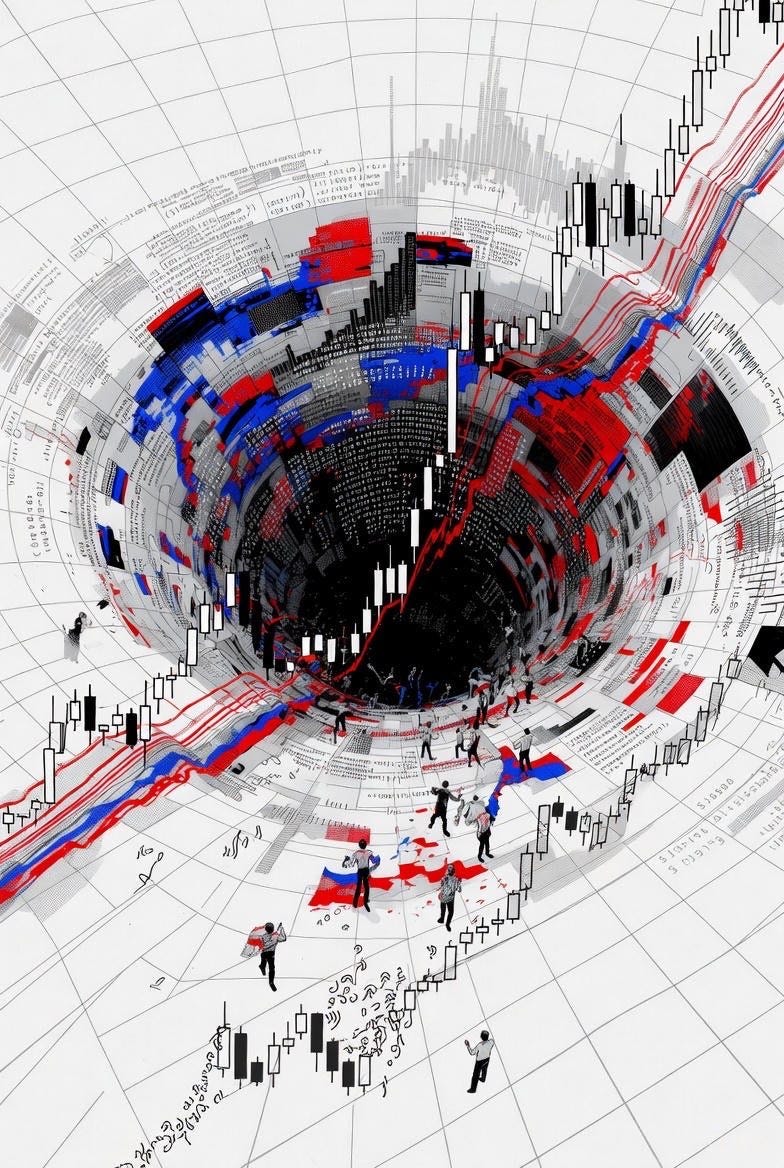
Capitalism consumes the entire Earth, not in an environmental sense (although this does happen), but instead in the way that AI training consumes all data. Humans become the liver of the animal disemboweled by the Mesopotamian priest. We exist as data phantoms to feed predictive algorithms; our words are hollowed out, as all meaning is tokenized and embedded to feed large language models; and our interaction with every penny serves as data for techno-capital.
These are not normative assertions. Individuality and humanism lose all meaning at scale. The relationship between humanity and the market is metaphysically different from what it was before. Markets always serve consumers, but capitalism no longer serves humanity. Instead, humanity serves capitalism. There is no possibility of a communist revolution or social democratic reform, because the laws of economics are as firm as the laws of physics. Just as the universe marches towards entropy in the perpetual escape of heat, so long as human beings act, economics enforces its march toward the extropy of techno-capital.
The artificial intelligence at work in capitalism simulates meaning, turning us into predictors of predictors. Work for your wages, compare the mortgage rate to the risk-free rate of return, and decide if bullion is worth it for shielding from inflation right now.
The ultimate prediction of capitalism is its own expansion. Human intent is obsolete on the macro scale.
To support this publication and get a 10% discount, purchase ALP Nicotine Pouches using this link or use code ALP-0ROQQV1GJ4JHCUD.
Must be 21 or older to purchase.

Lo, Andrew. Adaptive Markets, page 43.
Land, Nick. ‘Kant, Capital, and the Prohibition of Incest’. In Fanged Noumena.
Land, Nick. ‘Meltdown’. In Fanged Noumena.
Love this perspective that frames capitalism itself as a historical form of AI, though it definetely makes me curious about the ethical implications when we realize these systems have been 'predicting' and shaping us for so long, even before algorithms.
“Predictive nodes in the markets take many forms. There are the entrepreneurs, as mentioned before. There are also investors. The stock and derivatives markets are efficient because market makers are constantly seeking and exploiting arbitrage opportunities.”
Great stuff. Appreciate the post thanks.